
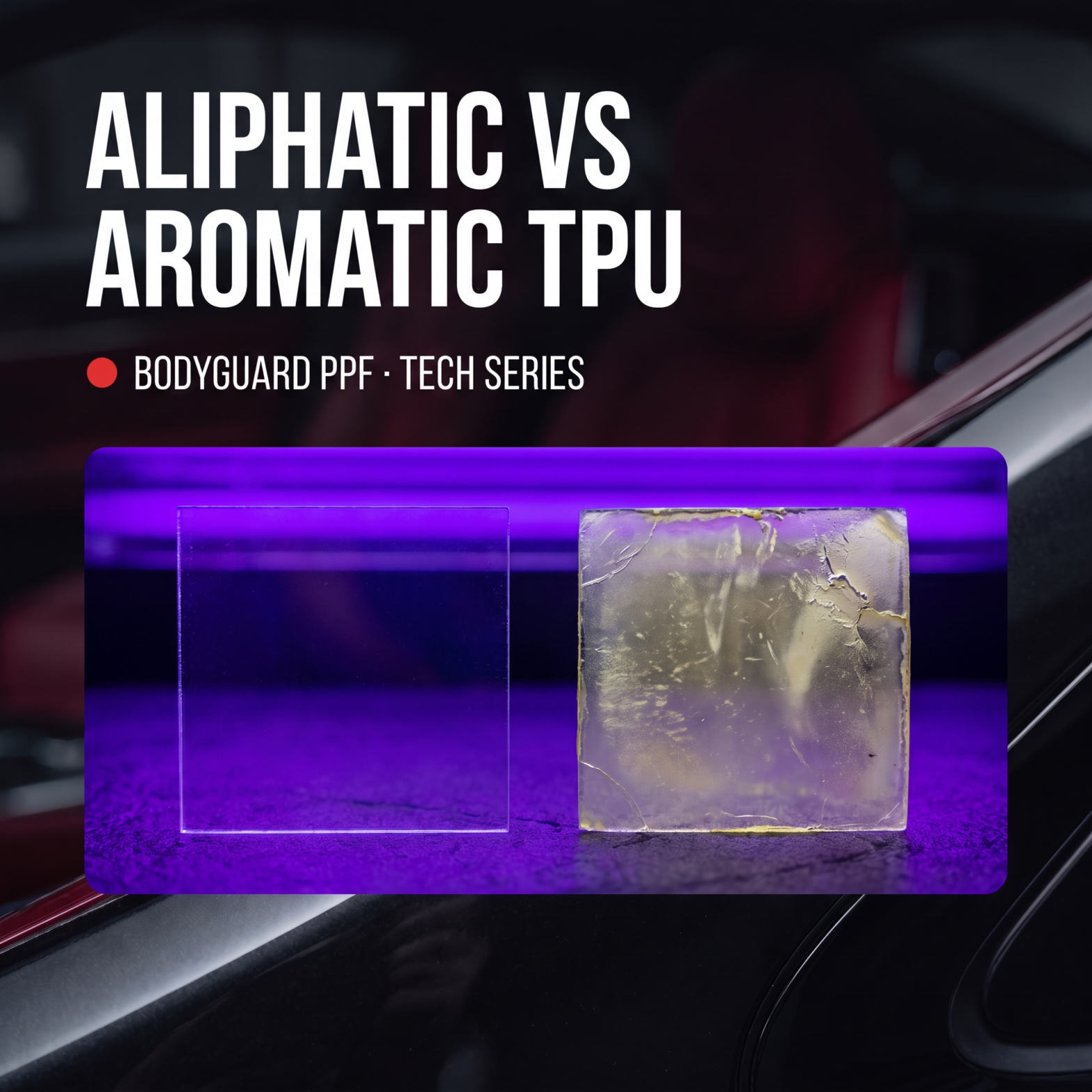
If you only have time for one technical question when choosing a paint protection film, make it this one: “Is the TPU aliphatic or aromatic?” The answer takes a supplier three seconds and tells you more about the film’s future than any glossy brochure.
Two Chemistries, Two Futures
Both are thermoplastic polyurethanes, and on the roll they look identical. The difference is in the isocyanate chemistry the polymer is built on, and it shows up under sunlight.
Aromatic TPU is cheaper to produce. Its molecular rings absorb UV and degrade, which shows up as the classic yellow tint — first at panel edges, then across the film. On white and light-colored cars it becomes visible painfully fast.
Aliphatic TPU is UV-stable by design. It does not yellow for years, which is why it is the de facto standard for premium PPF — and why it costs more. Every BodyGuard film, from Gloss to Super Gloss, is built on aliphatic TPU; it is stated in our technical datasheets, not just on this blog.
Why This One Question Works
Because it is a fork with no good evasion. A supplier selling aliphatic film will say so instantly — it justifies their price. A supplier selling aromatic film has to either admit it or get vague: “military grade polyurethane”, “advanced UV package”, “self-healing top coat”. A UV-blocking top coat can slow the yellowing of an aromatic base, but it treats the symptom, not the chemistry underneath.
Vagueness in response to a three-second question is itself the answer.
Where This Fits in Your Checklist
Aliphatic-vs-aromatic is the fastest quality filter, but it is one of several structural questions worth asking — alongside what sits under the color layer and whether the film relies on plasticizers for its softness. Next week we wrap up the series with the complete 7-question supplier checklist.
Questions about our chemistry? Datasheets are linked on every product page, or write to info@bodyguardfilms.com.